As we are shifting focus towards reopening Oregon and resumption of research activities, it is sobering to reflect that the coronavirus SARS-CoV-2 has, within a period of only a few months, infected more than 1.8 million people in the United States alone resulting in over 100 thousand deaths, and the numbers are still growing. We’ve learnt a lot about SARS-CoV2 infection, and its transmission, in droplets, on surfaces and door knobs, became quite knowledgeable about bell curves, modeling and flattening the curve became a statement that everybody understood, became well versed in the types of masks that should be used, how to shop enough for 2 weeks, how to find joy in the solo walks, and became extremely proficient and savvy in zoom meetings, figuring out how to be in two meetings and listen to a webinar at the same time (all while doing dishes and checking emails!).
As we get to close this most unusual spring term, I am very grateful to all the faculty, grad students, undergraduate TAs and students, and the office staff for their hard work, ability to stay motivated, and resilience in the face of the new remote world. We succeeded in carrying our mission of teaching, researching and serving the community. We have done well, and after finals week and before the reopening, we all deserve to turn off our zooms and our emails and take a little break! Stay tuned for a BB break day!
This has been and still is a time of great uncertainty and economic insecurity. We all have experienced a wide range of losses and disappointments from loss of dreams and shattered summer plans, wedding plans, internships, to extreme anxiety about loved ones. Some of you even experienced tragic losses. COVID-19 brought the world together around a common goal to accelerate research to find a vaccine and a cure, and thus highlighted the importance of science as an answer to the world’s problems, but it also exposed the fragility and the tragic inequities in our health care and socioeconomic systems. Even in the midst of COVID, brutality and racism are still raging, and one wonders how equipped we are to stand up for injustice. In an effort to learn new skills that use our science for the public good, I have invited Prof Shari Clough and Paul Chappelle to give a workshop about waging peace in times of uncertainty. Paul Chappelle is a graduate of West Point and a veteran of the war in Iraq, he created the idea of Peace Literacy after his time in the military. He developed the idea further in his seven-book series The Road to Peace, where he writes about waging peace, ending war, the art of living, and what it means to be human. Peace Literacy is a growing movement of educators and concerned citizens who want to empower people with the training, skills, and understanding needed to heal the root causes of our problems, rather than merely addressing surface symptoms. We cannot afford to be spectators! Join us this Friday from 3-5 pm.
Phase One: Specific Types of Employers
**NOTE: Needs review by Oregon Health Authority, Governor's Medical Advisory Panel and local public health.
Schools and organized youth activities
Phase One - Federal proposal: Remain closed
Oregon Modifications Under Consideration: Additional childcare reopening in Phase One
Visits to hospitals and senior living facilities
Phase One - Federal proposal: Prohibited
Large venues: sports, theaters, churches
Phase One - Federal proposal: Strict physical distancing and sanitation protocols
Oregon Modifications Under Consideration: Likely remain closed during Phase One
Sit-down dining
Phase One - Federal proposition: Strict physical distancing and sanitation protocols
Oregon Modifications Under Consideration: Work group to propose Phase One plan
Gyms
Phase One - Federal proposal: Strict physical distancing and sanitation protocols
Oregon Modifications Under Consideration: Likely remain closed during Phase One
Bars
Phase One - Federal proposal: Remain closed
Oregon Modifications Under Consideration: Likely remain closed during Phase One
Non-emergency procedures
Phase One - Federal proposal: Can resume, as clinically appropriate
Oregon Modifications Under Consideration: Oregon regional policy under review
Personal services
Phase One - Federal proposal: Not called out specifically
Oregon Modifications Under Consideration: Work group to propose Phase One plan
In spite of COVID-19, the state of our department is strong and we have a lot to celebrate. I want to continue informing the BB community of new proposals funded and submitted, new publications, and any other reminders worth noting that help convey that together we can make a difference.
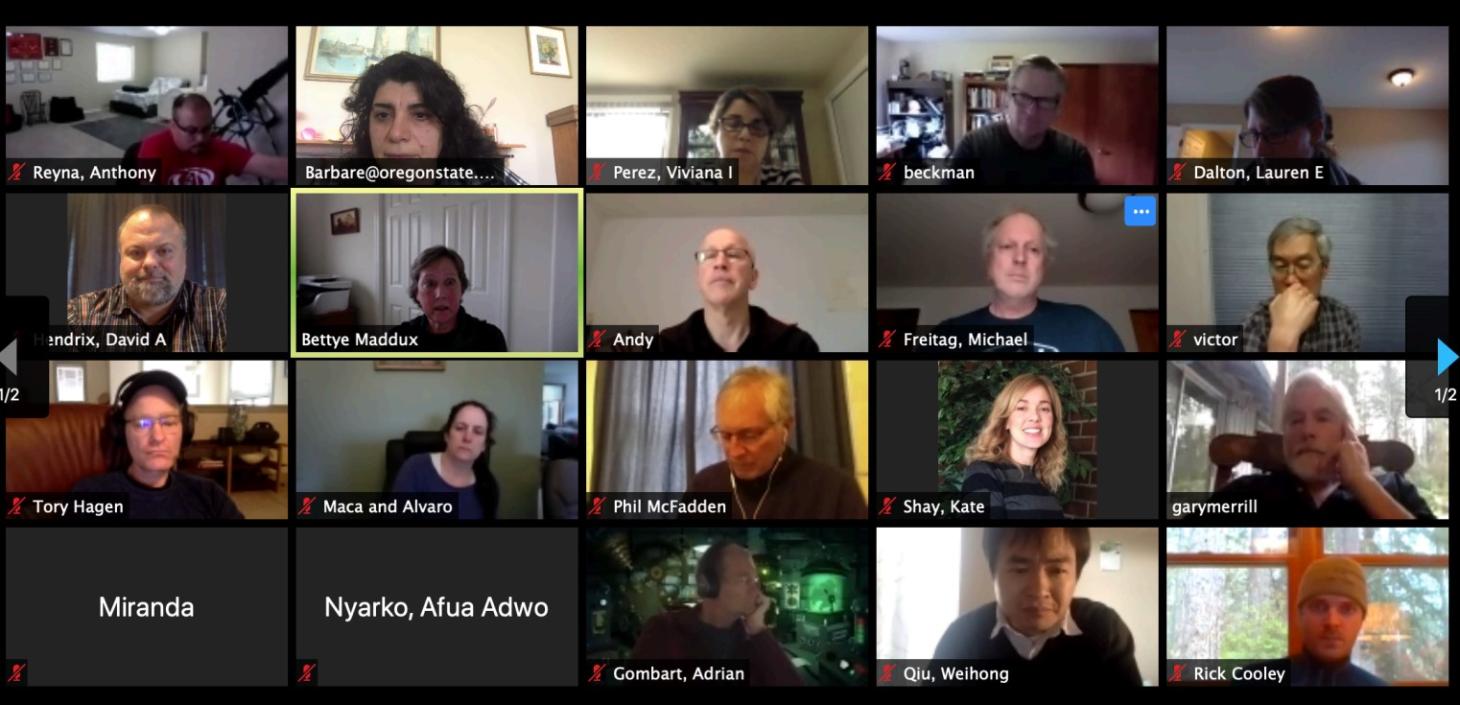
Faculty Zoom meeting
Bettye Maddux gave an overview of funding available in the COVID period, snapshot of our meeting.
Funded Proposals:
Viviana Perez received funding for an NIH R21 in response to the RFA on “Geroscience Approaches to Alzheimer's Disease” of $400K over 2 years to study “Nrf2 deficiency as a prime modulator of cellular senescence and Alzheimer's disease”.
Colin Johnson received funding from NSF for Establishing a common function for ferlin proteins in membrane fusion using novel genetic code expansion and single molecule techniques in the amount of $494,197 over 3 years.
Lauren Dalton with colleagues from IB (Jeremy Rose), Botany (Caity Smyth), and Statistics (Katie Jager) were awarded $20,000 through an ecampus research fellowship for a learning online project.
Submitted Proposals:
Victor Hsu submitted a proposal collaborative with Sinisa Todorovic (EECS) to the St. Baldrick's Foundation for $100K over 1 year to work on “Data-Driven Discovery of New Therapeutics Targeting Hepatoblastoma”
Maca Franco submitted a subcontract for $32K in funding over 2 years from the Simons Foundation’s Autism Research Initiative to work with collaborators at the University Of Miami Miller School Of Medicine to study the “Role of Redox Signaling in Autism Spectrum Disorder.”
Elisar Barbar together with Dave Hendrix and Rick Cooley submitted to NSF a 2-year $300K proposal for an EAGER grant to work on the “Structure and Assembly of SARS-CoV2 nucleocapsid”.
Rick Cooley is submitting an R01 proposal for $1.75M over 5 yrs to NIGMS for studying “PermaPhos: autonomous organisms for synthesis of permanently phosphorylated proteins”.
Serving on panels:
To acknowledge the incredible work that goes into reviewing proposals, I am mentioning the faculty who served on panels these past two months:
Elisar Barbar served on an NIH study section Special Emphasis panel for RM1 proposals in May. Please let me know of your activities to include in the coming newsletter.
Optimal Nutritional Status for a Well-Functioning Immune System Is an Important Factor to Protect against Viral Infections.
Calder PC, Carr AC, Gombart AF, Eggersdorfer M. Nutrients. 2020 Apr 23;12(4):1181. doi: 10.3390/nu12041181. PMID: 32340216 Free PMC article. Review.
Germ-Free Swiss Webster Mice on a High-Fat Diet Develop Obesity, Hyperglycemia, and Dyslipidemia. Logan IE, Bobe G, Miranda CL, Vasquez-Perez S, Choi J, Lowry MB, Sharpton TJ, Morgun A, Maier CS, Stevens JF, Shulzhenko N, Gombart AF. Microorganisms. 2020 Apr 5;8(4):520. doi: 10.3390/microorganisms8040520. PMID: 32260528 Free PMC article.
From the Mehl group:
Access to Faster Eukaryotic Cell Labeling with Encoded Tetrazine Amino Acids. Jang HS, Jana S, Blizzard RJ, Meeuwsen JC, Mehl RA. J Am Chem Soc. 2020 Apr 22;142(16):7245-7249. doi: 10.1021/jacs.9b11520. Epub 2020 Apr 10. PMID: 32251579
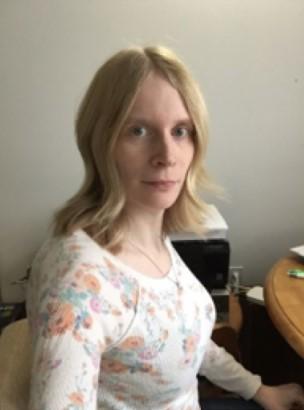
Isabelle Logan is the 2020 recipient of the P.F. and Nellie Buck Yerex Graduate Scholarship. During her time as a graduate student, she has published two first-author manuscripts. At the start of next school year, she will enter her fifth year of graduate school, at which point she hopes to have submitted her third manuscript. Isabelle loves everything about graduate school, mentoring, teaching, learning, and research.
Isabelle Logan
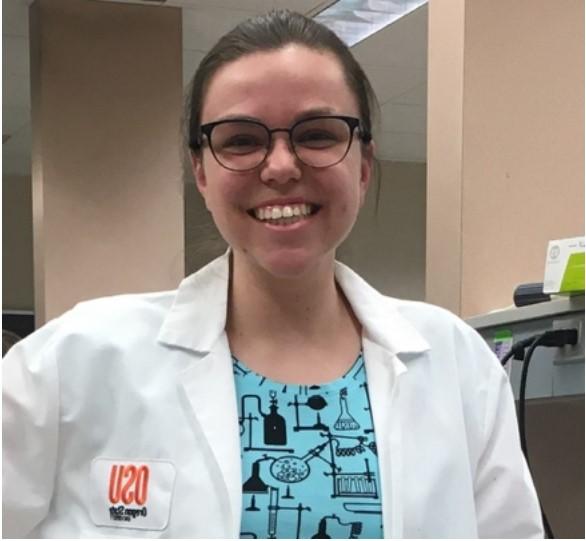
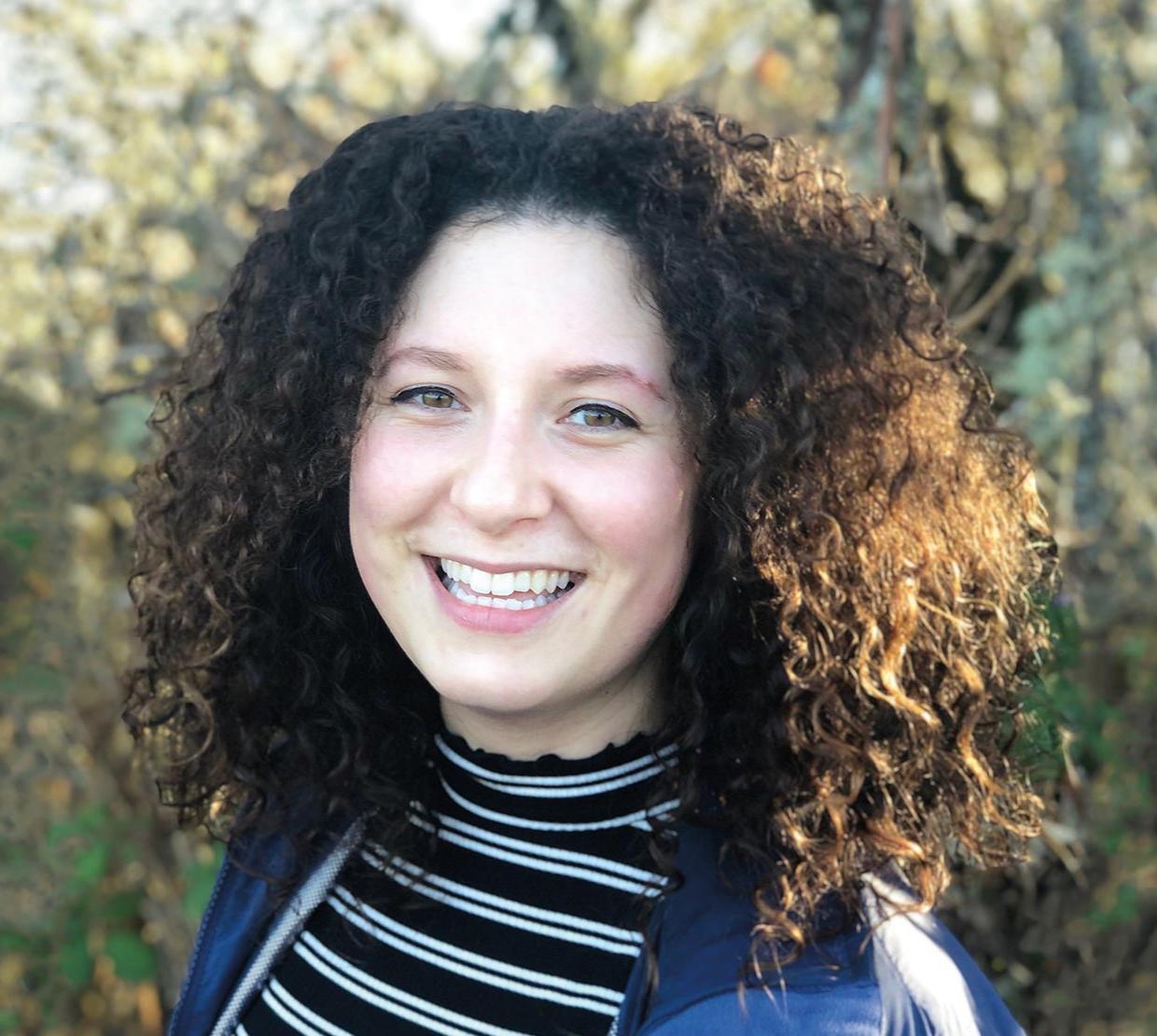
Kayla Jara is the 2020 recipient of the Herbert F. Frolander Award for Outstanding Graduate Teaching Assistants, a university wide award. Kayla is approaching her 4th year as a PhD candidate in Elisar Barbar's lab. She has served as the head TA for the BB450 course for multiple years as well as a TA for the BB494 Lab course.
Kayla Jara
Undergraduate Research Success:
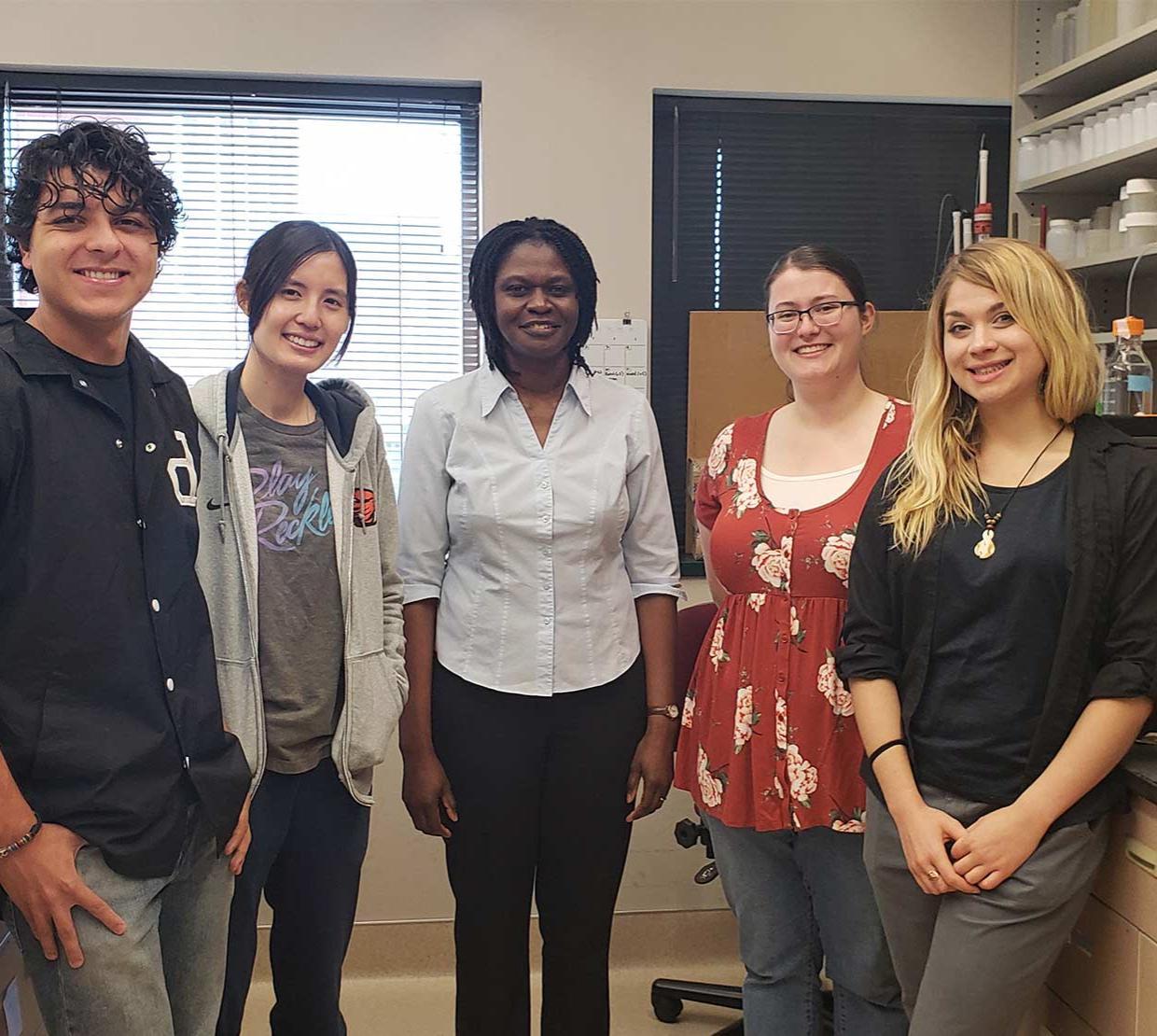
A nice Impact story about Diego Rodriguez, an undergraduate researcher in Afua Nyarko’s lab. Diego credits Afua’s guidance in allowing him to achieve his dreams. (beautiful piece!)
Left to right: Diego Rodriguez, Kathy Kwok, Assistant Professor Afua Nyarko and graduate students Kasie Baker and Amber Vogel.
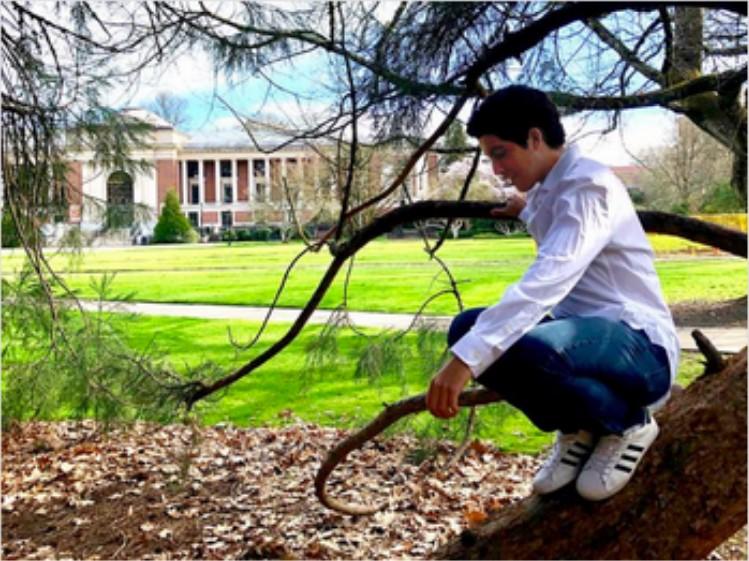
Isabella Karabinas is the only science student to receive the 2020 Fulbright Award to work at the Universidad Complutense de Madrid to study neuroscience. Isabella works with Alvaro.
Isabella Karabinas
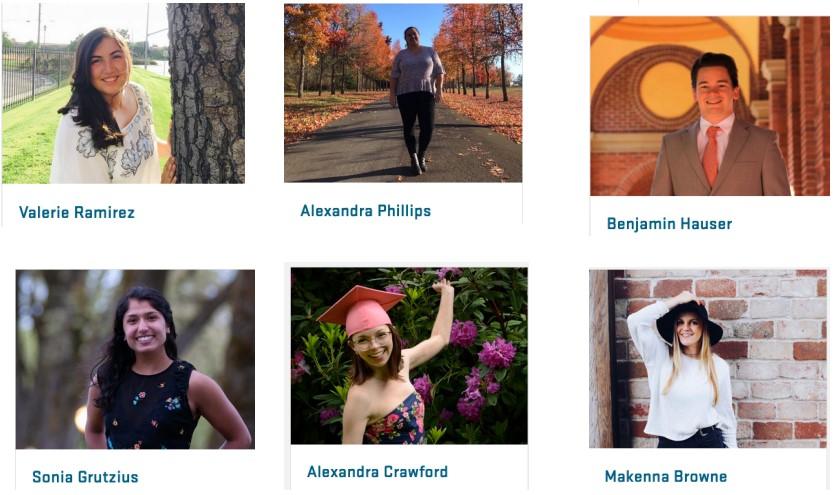
We have an amazing graduating class. We will miss them dearly and I am glad we will have the opportunity to say a zoom goodbye on June 12th. More on some of our undergrads here.
BB graduating class of 2020
BB graduating class of 2020:
Top row: Valerie Ramirez, Alexandra Phillips, Benjamin Hauser
Bottom row: Sonia Grutzius, Alexandra Crawford, Makenna Browne
BB Outreach:
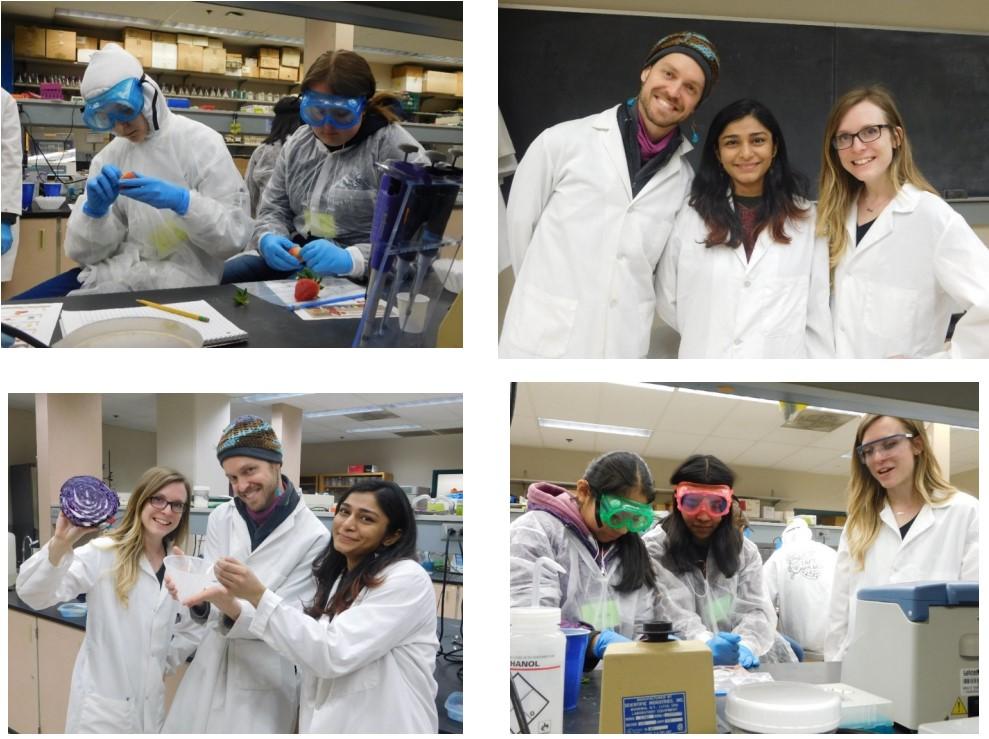
Discovering the Scientist Within On March 7th, just before the start of the stay-at-home order, the BB department held its yearly biochemistry workshop called Discovering the Scientist Within. This exciting event aims to nurture girl’s interest in science and encourage early engagement in STEM. This year, the workshop was themed around exploring the biochemistry in your kitchen. Students learned about the genetic code of life by extracting DNA from fruit and also made their own pH indicator with anthocyanin from red cabbage. The event was led by BB grad students, Rachel Franklin, Tilottama Chatterjee, and Nathan Waugh. Kari Van Zee also works regularly with the school to help plan the event.
Rachel Franklin, Tilottama Chatterjee, and Nathan Waugh
BB in the News:
Kevin Ahern live Chat online with The Great Courses. It was ostensibly about biochemistry, but the questions were mostly about coronavirus.
An “upbeat” video from Kevin got posted by the COS on Facebook and it's also on YouTube
Fritz Gombart: OSU researcher: Vitamin C, D supplements can help fight off COVID-19 (KTVZ) Supplements containing vitamins C and D and other micronutrients, sometimes in amounts exceeding the federally recommended levels, are a safe, effective and low-cost means of helping your immune system fight off COVID-19 and other acute respiratory tract diseases, an Oregon State University researcher says. (see also New Food)
Upcoming Events
• June 5th, 3-5 Peace literacy in navigating COVID-19 uncertainty (Paul Chappell & Sharyn Clough, all invited)
• June 12th, graduation zoom, 7 pm
• June 16th, 9 am end of the term meeting
• June 19th, 3-4, Science Talks
• 3rd year talks, June/July Coffee hour every Friday at 4 pm
I hope this newsletter serves as a diversion in these tumultuous times, and an encouragement to persevere and thrive. I am sure I have forgotten many important events, please send me your news to include in the next issue.
Thanks for reading this far! I will continue with my weekly briefing and will catch up again in two months.