Training Program in Molecular Biophysics of Complex Systems

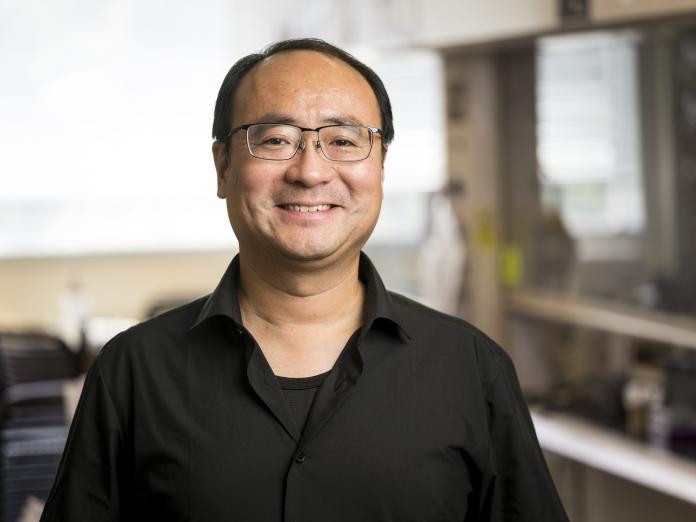
Elisar Barbar with Graduate Students

Elisar Barbar works in the NMR facility with graduate students Kayla Jara-Weber and Patrick Morar

Connecting Oregon State graduate students to mentors from eight departments across four colleges

The newly developed Ph.D. Training Program in Molecular Biophysics of Complex Systems (MBCS) at Oregon State University offers an integrated and multidisciplinary platform to predoctoral students at the interface of biophysics and cell biology. MBCS focuses on quantitative linkages that define this interface, and to prepare trainees for careers in molecular biomedical research.

Our objective is to provide MBCS Program trainees with a comprehensive and rigorous training in molecular biophysics and understanding of its fundamental role in transdisciplinary research leading to innovative and impactful scientific advances and technologies that benefit society.

Through implementation of this program, we will lower the barriers separating departments and colleges, facilitating integration of the currently diffuse biophysics-related research and educational programs under one umbrella, thus incorporating, and coordinating the strength of each program. Our 22 training faculty provide extensive resources for research, student support, and highly collaborative training environments.

Program Directors

Program outcomes

MBCS Program participants will gain comprehensive and rigorous training in molecular biophysics and understanding of its fundamental role in transdisciplinary research leading to innovative and impactful scientific advances and technologies that benefit society.

  • Train at a powerful scientific intersection by applying quantitative biophysics to core problems in molecular and cellular biology.
  • Engage with a strong, collaborative research community that provides diverse mentoring and cutting‑edge expertise.
  • Build professional skills with targeted career development and structured mentoring.
  • Achieve meaningful outcomes by working with faculty mentors on cutting-edge research, publications and conference presentations.

Preparing to apply

During the first year, all Ph.D. students from all departments are supported through a Graduate Teaching Assistantship, take courses, and perform research through rotations.

Criteria and applying

By the end of the Winter term of the first year, all students will choose a mentor, and those with research intersects in the area of molecular biophysics will be encouraged to apply at the end of the Spring term by submitting the following:

  • A statement of intent that summarizes the applicant’s goals and research experience.
  • First-year grades. If a student has a low grade in a course, they may also request a letter from the instructor describing the student’s performance in the class. For example, the student may not perform well in exams but is highly engaged in classroom activities. First year grades should also include rotation evaluations.
  • A two-page project proposal (vetted by mentors).
  • Letter of support from the mentor (and co-mentor if working on a collaborative project) expressing the commitment to continue to fund and support the applicant through graduation.

Statement of Intent: (2 pages max)

  • Provide information regarding the educational, scientific, and professional experiences that prepare the candidate for the proposed research training plan.
  • Describe how relevant activities and experiences contributed to the candidate's scientific development and preparation for the current research training plan. Examples may include coursework, research experiences, conference attendance, internships, and employment.
  • Discuss any additional activities and experiences that demonstrate an interest and commitment to a career in the biomedical research workforce. Examples may include seeking out opportunities for research skill development or engaging in leadership, service, teaching, or outreach activities.
  • Candidates should describe the goals for the proposed research training plan and the long-term goals for a career in biomedical research workforce.
  • Relate the fellowship goals to the long-term career goals.
  • Candidates should describe their motivation for pursuing a career in the biomedical research workforce.

Project Proposal: (2 pages max)

  • Provide the context for the proposed research training project. Include information on published and unpublished findings serving as the scientific foundation for the proposed research training project. Describe the strengths and weaknesses in the rigor of the prior research that serves as the key support for the proposed project (1/3 page).
  • Describe the rationale for the research training project, including unaddressed areas for research and why this area of research is interesting and important (1/3 page).
  • Describe how achieving the proposed research training project goals will advance biomedical research in the candidate's chosen field (1/3 page).
  • Describe the overall strategy, methodology, and analyses to be used to accomplish the specific aims of the project. Describe plans to address weaknesses in the rigor of the prior research that serves as the key support for the proposed project. Describe the experimental design and methods proposed and how they will achieve robust and unbiased results (1 page).

Overview of training activities

Disciplines represented in the MBCS centered around complex systems are broadly grouped under three themes:

  1. Data modeling and mining using computational methods,
  2. Measuring and mapping using a broad range of biophysical techniques, and
  3. Making and modifying using and developing innovative technology for better measurement and application tools.

The MBCS Training Program prepares Ph.D.s to graduate in 5 years

Year one

Trainees will initiate their academic coursework as directed by their home departments, perform graduate teaching assignments and attend department- and MBCS-sponsored activities such as seminars and retreats to learn about the program and faculty.

Ph.D. students will join a research group by the Spring or Summer term of their first year, at which point they will be recruited to participate in the T32 MBCS Program.

Year two and three

Once accepted into the MBCS Program, trainees will receive support through program funds.

In addition to their home department degree requirements, Program participants participate in structured training activities, including science and society discussions and networking, professional development and leadership training, a writing intensive course, a internship or teaching practicum, and student research presentations.

Year four and five

Trainees will be funded by their home departments through Graduate Research or Teaching Assistantships.

Required and Elective Courses

Required Courses

Core MBCS

  • BB 570 – Biophysics of cellular processes and molecular function (3 credits)
  • BB 582 – Survey and applications of modern biophysical experimental techniques (3 credits)
  • BB 683 – Molecular biophysics of complex systems (3 credits)
  • BB 699 – Grant proposal and manuscript writing (e.g., prep. for NIH F31 submission) (2 credits)
  • ST 511 – Methods of data analysis (3 credits)

Rigor and Reproducibility

  • GRAD 520 – Research ethics, misconduct, peer review, mentoring (2 credits)
  • GRAD 521 – Research data management: Preservation, documentation and sharing (2 credits)

Cohort-building

  • BB 607A – MBCS recent advances in molecular biophysics journal club (taken every year) (1 credit)
  • BB 607B – MBCS faculty and invited speaker seminars (taken every year) (1 credit)
  • BB 607C – MBCS student research presentations (taken every year) (1 credit)

Elective Courses

Biochemistry and Molecular Biology

  • BB 590 – Biochemistry I: Building blocks of life, protein folding, enzyme kinetics (3 credits)
  • BB 591 – Biochemistry II: Regulation pathways, synthesis and metabolism, energetics (3 credits)
  • BB 592 – Biochemistry III: Genetics, nucleic acids (DNA/RNA synthesis, processing, repair), protein synthesis and modification (3 credits)
  • BB 586 – Advanced molecular genetics and cell biology with focus on modern techniques (3 credits)

Biophysical Methods

  • BB 581 – Macromolecular structure of proteins, nucleic acids, and other molecules (3 credits)
  • BB 583 – Advanced biochemistry and biophysics capstone (3 credits)
  • CH 652 – Molecular spectroscopy (3 credits)
  • SCI 551X – Introduction to nuclear magnetic resonance (NMR) theory (2 credits)
  • SCI 552X – Applications of NMR to biological macromolecules (3 credits)

Mathematical and Computational Modeling

  • BB 585 – Applied bioinformatics, genome and functional annotations, sequence alignment (3 credits)
  • BB 599 – Molecular modeling and computer simulation (3 credits)
  • BDS 570 – Introduction to computing in the life sciences (3 credits)
  • BDS 572 – Advanced computing for biological data analysis (3 credits)
  • CH 553 – Statistical thermodynamics of chemical systems (3 credits)
  • MB 668 – Microbial bioinformatics and genome evolution (3 credits)
  • MTH 527 – Mathematical modeling of biological systems (3 credits)
  • PH 591 – Physical principles of kinetics and dynamics of biological systems (3 credits)
  • ST 591 – Introduction to quantitative genomics (3 credits)
  • ST 592 – Statistical methods for genomics research (3 credits)

Career development activities for participants

Summer Head Start for recruiting underrepresented minority, disabled or disadvantaged students will be supported as part of an active institutional diversity program. MBCS Program trainees (steady state of ten students, five slots per training year) will be supported in the second and third year of graduate research. New courses are included along with innovative tailoring of existing courses ranging from cellular biophysics and molecular spectroscopy to mathematical modeling.

Summer workshops include theory and hands-on application of methodologies from nuclear magnetic resonance (NMR) to genetic code expansion. To ensure our intended outcomes of turning out trained scientists, productive in their research during and after training, our evaluation procedures will include measures such as first-author publications, presentations at meetings, fellowships funding and career outcomes.

Meet our training faculty

Our mentors bring diverse perspectives across disciplines, career stages, cultural backgrounds, and lived experiences.

8

Departments represented

35%

Scientists of color

35%

Scientists identifying as women

17%

Early-career faculty

Frequently Asked Questions

Applications to the program are due on June 30th, after the end of Spring term (see the website for details). Students are eligible to apply at the end of their first or second year in their Ph.D. programs.

Students accepted into the program will be financially supported by the program for a period of 2 consecutive years (support will run from Fall to Summer). This includes stipend, tuition, health insurance, and a $300 travel allowance. Reappointment for the second year is contingent on strong participation in the weekly journal club, a choice of a project that is aligned with molecular biophysics and passing the prelim exam.

Students must be pursuing training and research that is well-aligned with the central theme of the program in molecular biophysics. As such, students will need to have taken at least 3 courses from the Core MBCS or Biophysical Methods categories (see the curriculum page here) by the time they apply to the program. Additionally, students must be advised or co-advised by one of the Core molecular biophysics-focused mentors in the program who are trained in biophysics, are equipped and expected to keep their trainees up to speed in biophysics over the course of their degrees, and have a research project that has a strong focus on molecular biophysics. There are no specific degree requirements, but students are expected to complete the MBCS T32 program curriculum in addition to their Ph.D. requirements. NIH stipulates that students must be US citizens or permanent residents to be supported by federal funds for this program. However, the OSU College of Science is generously providing an additional slot in the program which may support international students.

One of the goals of the MBCS T32 program is to build collaborations that advance the field of molecular biophysics. As such, we encourage students and faculty to reach out to the mentors in the program to discuss potential collaborative projects. As mentioned in the previous question, students must at least be co-advised by a core MBCS T32 mentor in order to be eligible to apply. Co-advised status means equal contribution to publications that come out from the mentee from both mentors.

At the core, molecular biophysics seeks understanding of the fundamental properties and interactions of biomolecules and the role they play in biological function. This includes: i) structural biology of proteins, peptides, nucleic acids, and lipids among others; ii) dynamics and regulation of large molecular machines; iii) assembly of supramolecular structures; iv) mechanistic understanding of molecular function. Faculty mentors in the MBCS T32 program use a broad range of experimental and computational techniques to study these molecular systems including nuclear magnetic resonance (NMR), X-ray crystallography, cryo-electron microscopy, ultrafast laser spectroscopy, quantum mechanical calculations, molecular dynamics simulations, mathematical modeling, and machine learning bioinformatics approaches, among many others.

While students are only funded a maximum of 2 years from NIH, they are expected to participate in program activities till they graduate, and their PIs are expected to contribute to annual progress reports and program renewal.

New mentors who wish to apply to be part of the MBCS program, they should send a cover letter describing their research focus in molecular biophysics and an NIH bio sketch with a personal statement that highlights track record in mentoring and interest in training.

Please see the eligibility requirements above regarding the biophysics focused project and training. In principle, we can accept students who are already on fellowships in the program and offer partial support.

All fellows—including those who already have mentors from the core faculty—are expected to use the grant-funded portion of their time to collaborate with an additional MBCS mentor. This collaboration should introduce a new method or approach to their project and lead to a co‑authored publication involving both mentors.